
What Is Generative Engine Optimization (GEO)?
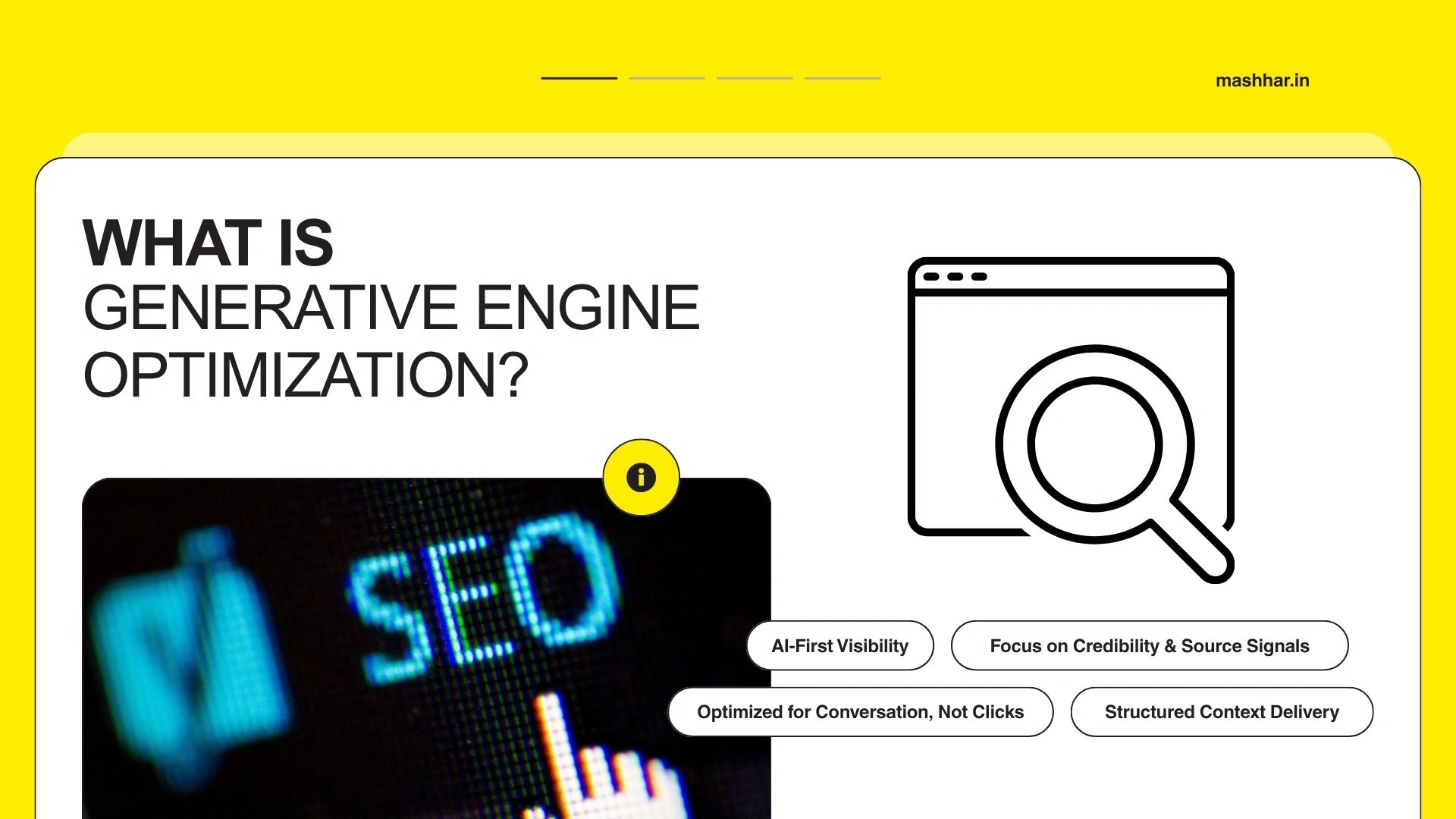
Generative Engine Optimization (GEO) is the practice of optimizing your content so that AI-powered search engines — such as ChatGPT, Google AI Overviews, Perplexity, and Gemini — cite it as a trusted source when generating responses.
Unlike traditional SEO, which focuses on ranking your pages in a list of results, Generative Engine Optimization focuses on earning citations inside AI-generated answers. When a user asks ChatGPT a question, the AI synthesizes an answer from multiple sources and picks the ones it trusts most. Generative Engine Optimization is how you become one of those sources.
This is more important than ever in 2026. Approximately 55% of all searches now include Google AI Overviews. ChatGPT processes over 2 billion queries every day. These AI tools are sitting between your content and your audience — and they decide what gets seen.
How Do GEO and AEO Differ?
Generative Engine Optimization (GEO) and Answer Engine Optimization (AEO) are two separate but related methods:
- AEO (Answer Engine Optimization) helps your content appear in direct answer features — like Google’s Featured Snippets, People Also Ask boxes, voice assistant responses, and AI Overviews. It focuses on being the answer to a specific question.
- GEO (Generative Engine Optimization) focuses on getting your content cited inside a larger AI-generated response. It is about being a trusted source that AI tools reference when composing their answers.
Put simply: AEO helps AI answer the question. Generative Engine Optimization (GEO) helps AI decide who to quote.
Both work together. A piece of content that is well-optimized for AEO — with clear questions, direct answers, and FAQ schema — also performs better for GEO. The two strategies are not competitors. They reinforce each other.
Why GEO and AEO Matter in 2026
Search behavior has changed fundamentally. Here is what the data shows:
- AI-referred sessions to websites grew 527% year-over-year through mid-2025.
- AI traffic converts at 14.2% for B2B websites, compared to just 2.8% for traditional organic traffic — a 5x advantage.
- According to Gartner, the volume of traditional search engines will decrease by 25% by 2026 as a result of AI chatbots and virtual agents.
- ChatGPT processes 2.5 billion prompts daily, 65% of which qualify as search.
The message is clear. Your audience is increasingly using AI tools to research, compare, and make decisions. If your content is not structured for AI citation, you are invisible to a growing portion of your potential customers.
How Generative Engine Optimization (GEO) Works: What AI Engines Look For
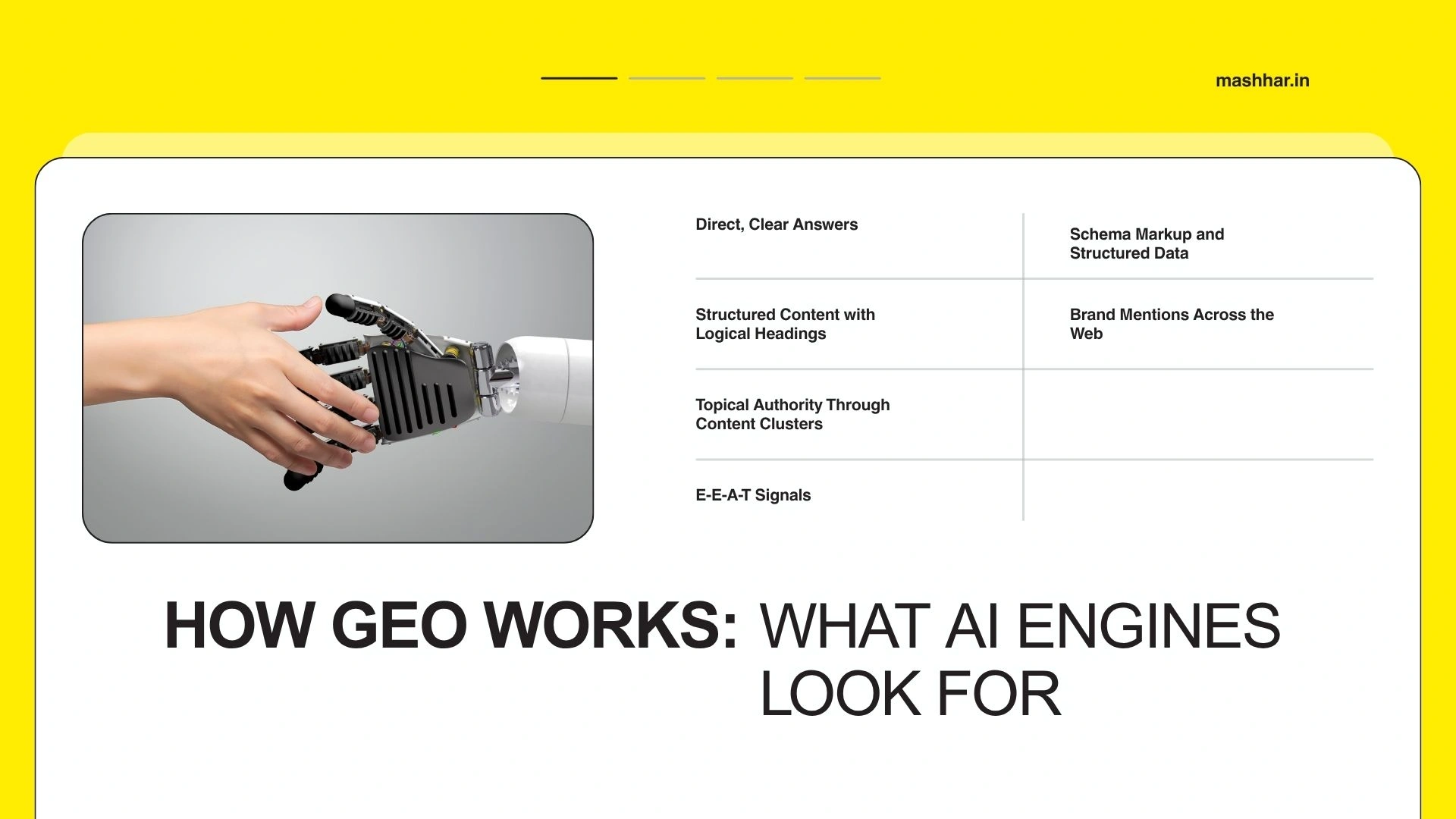
AI language models do not read your website the way a human does. They scan for specific signals that indicate your content is credible, clear, and citable. Here is what they prioritize:
1. Direct, Clear Answers
AI engines prefer content that answers questions immediately and without ambiguity.In the event that a user queries, “What is Generative Engine Optimization (GEO) in marketing?”, the AI looks for a source that answers that exact question in the first one or two sentences of a section — not buried at the bottom of a long paragraph.
Best practice: Start each section with a direct answer to the implied question. Write your opening sentence as if it could stand alone as the complete answer.
2. Structured Content with Logical Headings
AI systems parse your content using your heading structure. Clear H2 and H3 headings that match the questions users ask make it significantly easier for AI to extract and cite your information.
Use question-based headings as a best practice. Instead of writing “Our SEO Approach,” write “How Does SEO Work in 2026?” This is similar to how people write queries for AI technologies.
3. Topical Authority Through Content Clusters
AI engines assess your overall authority on a subject — not just the quality of one article. When your website covers a topic comprehensively across multiple related pages, AI models treat you as an authoritative source and are more likely to cite you across many different queries.
Best practice: Build pillar pages supported by cluster articles. A pillar page on “Digital Marketing Strategy” should link to separate articles on SEO, GEO, AEO, social media, content marketing, and email marketing.
4. E-E-A-T Signals
Google’s quality framework — Experience, Expertise, Authoritativeness, and Trustworthiness — is the shared quality standard across SEO, AEO, and GEO. AI systems are trained to prefer content that demonstrates genuine expertise.
Best practice: Include author bios with credentials. Cite external data sources. Link to authoritative references. Keep your content updated with accurate, current information.
5. Schema Markup and Structured Data
Schema markup gives AI engines a machine-readable map of your content. FAQ schema, HowTo schema, and Article schema help AI tools understand the type and context of your information — making it far easier to extract and cite.
Best practice: Add FAQ schema to every page that contains a question-and-answer section. Use JSON-LD format for implementation.
6. Brand Mentions Across the Web
AI tools like ChatGPT and Perplexity frequently cite Reddit, Wikipedia, LinkedIn, and industry publications. When other credible sources mention your brand, it signals to AI models that you are a recognized authority.
Best practice: Build your off-site presence through guest articles, PR coverage, community participation, and industry publications — not just your own website.
AEO Optimization: How to Appear in Featured Snippets and AI Overviews
Answer Engine Optimization is the tactical layer that makes your content extractable. Here is how to apply it:
Write answer-first paragraphs. Place your most direct, concise answer at the very beginning of each section. AI Overviews and featured snippets pull from opening sentences.
Use question-based subheadings. Headings like “What does Generative Engine Optimization (GEO) mean?” or “How do I optimize for AI search?” mirror the queries that cause the answer features to activate.
Include FAQ sections. A dedicated FAQ block at the end of each article gives AI engines a ready-made source for question-and-answer extraction. Mark it up with the FAQ schema.
Use lists and tables where relevant. Structured formats like bullet points, numbered steps, and comparison tables are easy for AI to parse and present. Content that uses these formats is more likely to appear in AI summaries.
Write in plain, precise language. Avoid complex phrasing, jargon, or ambiguous statements. AI tools prefer content that is easy to interpret and unlikely to be misread.
Platform-Specific Generative Engine Optimization (GEO) Tips
Different AI platforms have different preferences for content sources:
- Google AI Overviews: The main source of information for Google AI Overviews is the top-ranked organic results. Strong traditional SEO is the foundation.
- Perplexity rewards fresh content, multi-channel brand presence, and authoritative sources like Reddit and LinkedIn.
- Microsoft Copilot leans heavily on LinkedIn content for B2B queries.
- ChatGPT regularly references extensive, Wikipedia-style pages as well as more general, well-known sources.
- Gemini analyzes multimodal content including video and images — making YouTube presence a GEO factor.
- Claude prefers long-form, comprehensive guides with depth and clear structure.
This means your GEO strategy should not be limited to your website alone. Building a presence on LinkedIn, publishing on industry platforms, and maintaining an active brand across multiple channels all contribute to your AI visibility.
GEO vs SEO vs AEO: A Quick Comparison
| SEO | AEO | GEO | |
|---|---|---|---|
| Goal | Rank on search engine results pages | Appear in direct answer features | Get cited in AI-generated responses |
| Platform | Google, Bing | Featured Snippets, AI Overviews, Voice | ChatGPT, Perplexity, Gemini, Claude |
| Success Metric | Rankings and organic traffic | Featured snippet appearances | Brand citations in AI responses |
| Key Tactics | Keywords, backlinks, technical SEO | Q&A structure, FAQ schema | Topical authority, E-E-A-T, structured data |
| Timeline | Months | Weeks to months | Weeks to months |
Frequently Asked Questions About GEO
- In digital marketing, what does GEO stand for?
GEO stands for Generative Engine Optimization. It is the practice of structuring and positioning content so that AI-powered tools like ChatGPT, Perplexity, and Google’s AI Overviews cite it in their generated responses. - Is Generative Engine Optimization replacing SEO?
No. Generative Engine Optimization (GEO) enhances SEO rather than replaces it. The basis for organic search visibility is still traditional SEO. GEO adds a new layer that helps your content get discovered through AI-generated answers. The most effective strategy in 2026 combines SEO, AEO, and GEO together. - How much time does it take to see Generative Engine Optimization results?
GEO results can appear faster than traditional SEO — often within weeks rather than months — because AI engines update their outputs regularly based on current web content. However, building the topical authority and credibility that drives consistent AI citations is a longer-term commitment. - What distinguishes LLMO from Generative Engine Optimization?
LLMO (Large Language Model Optimization) is a technical subset of GEO. While Generative Engine Optimization covers the broad strategy of earning citations in AI-generated content, LLMO focuses specifically on how large language models retrieve and process information. The two terms are frequently used interchangeably in everyday speech. - Can small businesses benefit from Generative Engine Optimization?
Yes. In fact, GEO can level the playing field for smaller brands. A well-structured, genuinely authoritative article from a smaller website can be cited by AI tools just as readily as content from large publishers — as long as it clearly answers the question and demonstrates expertise.
How to Get Started with GEO Today
You do not need to rebuild your entire content strategy to start benefiting from GEO. Here are four steps you can take immediately:
- Step 1 — Audit your existing content. Identify your best-performing articles and restructure them with direct answer-first openings, question-based headings, and an FAQ section at the bottom.
- Step 2 — Add schema markup. Implement FAQ schema and Article schema on your key pages. For both AEO and Generative Engine Optimization (GEO), this is one of the most obvious technical advancements you can make.
- Step 3 — Build topic clusters. Choose two or three core topics your business owns and create a comprehensive content cluster around each one. Answer every follow-up question your audience may have.
- Step 4 — Monitor your AI visibility. Regularly test your target queries in ChatGPT, Perplexity, and Google AI Mode. Verify if your brand or content is being referenced. Track changes over time to see what is working.
Conclusion
Generative Engine Optimization is not the future of digital marketing. It is the present. AI tools are already the primary discovery layer for millions of users, and that number is growing every month.
The brands that will win in this environment are not the ones chasing rankings. They are the ones creating content that is genuinely authoritative, clearly structured, and easy for both humans and machines to trust.
Start with your best content. Make it answer-first, structure it for AI, and build the topical authority that earns you a place in AI-generated responses. That is the foundation of a Generative Engine Optimization (GEO) and AEO strategy that works — not just in 2026, but in every year that follows.
Visit For More Blogs, Click Here