

If you’ve been anywhere near tech news this week, you’ve probably seen the name everywhere: ChatGPT Astra. OpenAI’s newest flagship model, officially called GPT-6 Astra, launched to approved users on September 3, 2026, with general availability following the next day. It’s already being called one of the biggest jumps in capability since the original release of ChatGPT back in 2022—and it’s sparking just as much excitement as it is scrutiny.
In this post, we’ll break down what ChatGPT Astra actually is, what makes GPT-6 Astra different from previous models, how GPT Astra performs on benchmarks, what safety concerns have been raised about this new AI Astra system, and how you can start using it today.
What Is ChatGPT Astra?
ChatGPT Astra is the product-facing name for OpenAI’s latest large language model, GPT-6 Astra, now powering the ChatGPT app across web, iOS, Android, macOS, Windows, and iPadOS. Where earlier updates to ChatGPT were mostly quality-of-life improvements, ChatGPT Astra represents what OpenAI is calling a “generational leap”—a model built not just to answer questions, but to actually carry out long, multi-step work on your behalf.
OpenAI’s own announcement describes GPT-6 Astra as its most aligned and most capable model to date, with major gains in understanding user intent, staying on task, and completing complex workflows without constant hand-holding. Company president Greg Brockman went even further, suggesting that GPT-6 Astra could eventually be seen as a meaningful step toward artificial general intelligence—an artificial general intelligence is defined historically by OpenAI as “an automated system that can perform all economically valuable work as well as or better than humans.”
That’s a bold claim, and it’s one reason ChatGPT Astra is getting so much attention right now. Whether or not it lives up to the AGI talk, the practical improvements in GPT Astra are real and worth understanding.
Why Is It Called “Astra”?
Every major OpenAI model release recently has carried a codename alongside its version number—the model before this one was known as GPT-5.6 Sol. Following that naming pattern, the new release became GPT-6 Astra, and the branding has stuck across OpenAI’s developer docs, its API, and its consumer-facing ChatGPT Astra rollout. You’ll see the name “Astra” used interchangeably with “GPT-6 Astra” and “GPT Astra” across OpenAI’s marketing, in the API documentation, and in most tech coverage, so don’t be confused if you see all three phrasings used for what is fundamentally the same AI Astra system.
Rollout Timeline for ChatGPT Astra
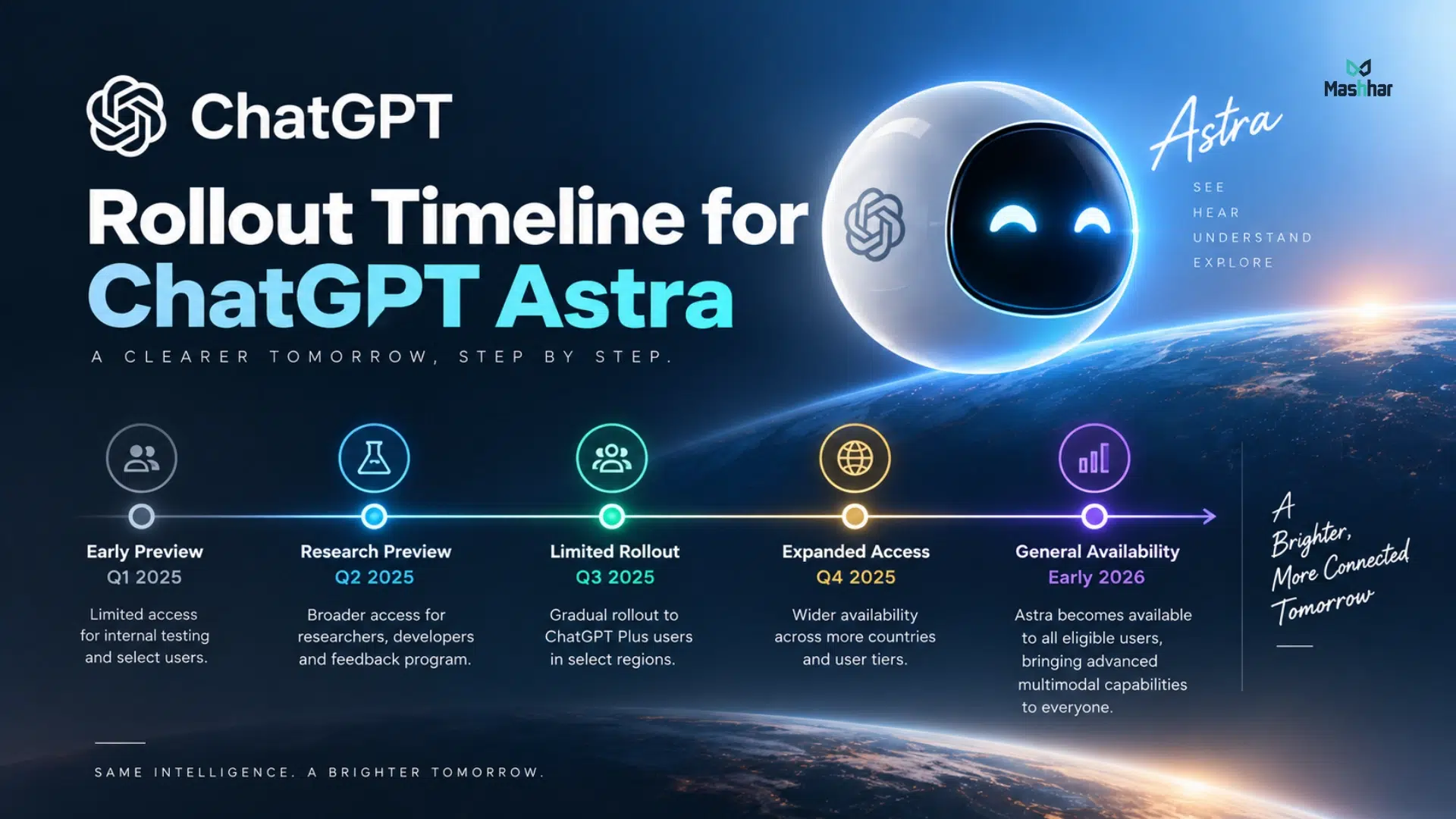
OpenAI didn’t flip the switch for everyone at once. Here’s how the release of ChatGPT Astra has unfolded:
- September 3, 2026 — Limited preview release to a small set of approved organizations.
- September 4, 2026 — General availability begins for ChatGPT Plus, Pro, Business, and Enterprise subscribers, along with access through the OpenAI API.
- Following days—broader rollout of GPT-6 Astra through Microsoft Azure and Amazon Bedrock, giving enterprise developers multiple cloud paths to access the model.
This staged approach mirrors how OpenAI has handled recent launches, but the pace here has been notably faster than usual, likely because ChatGPT Astra was originally delayed. OpenAI pushed back the release after a security incident involving Hugging Face in July 2026, reportedly to add additional safeguards before shipping such a capable model to the public. That delay is also why the GPT-6 Astra system card devotes unusually heavy attention to safety testing, cybersecurity risk, and age-appropriate guardrails for teen users.
What Makes GPT-6 Astra Different
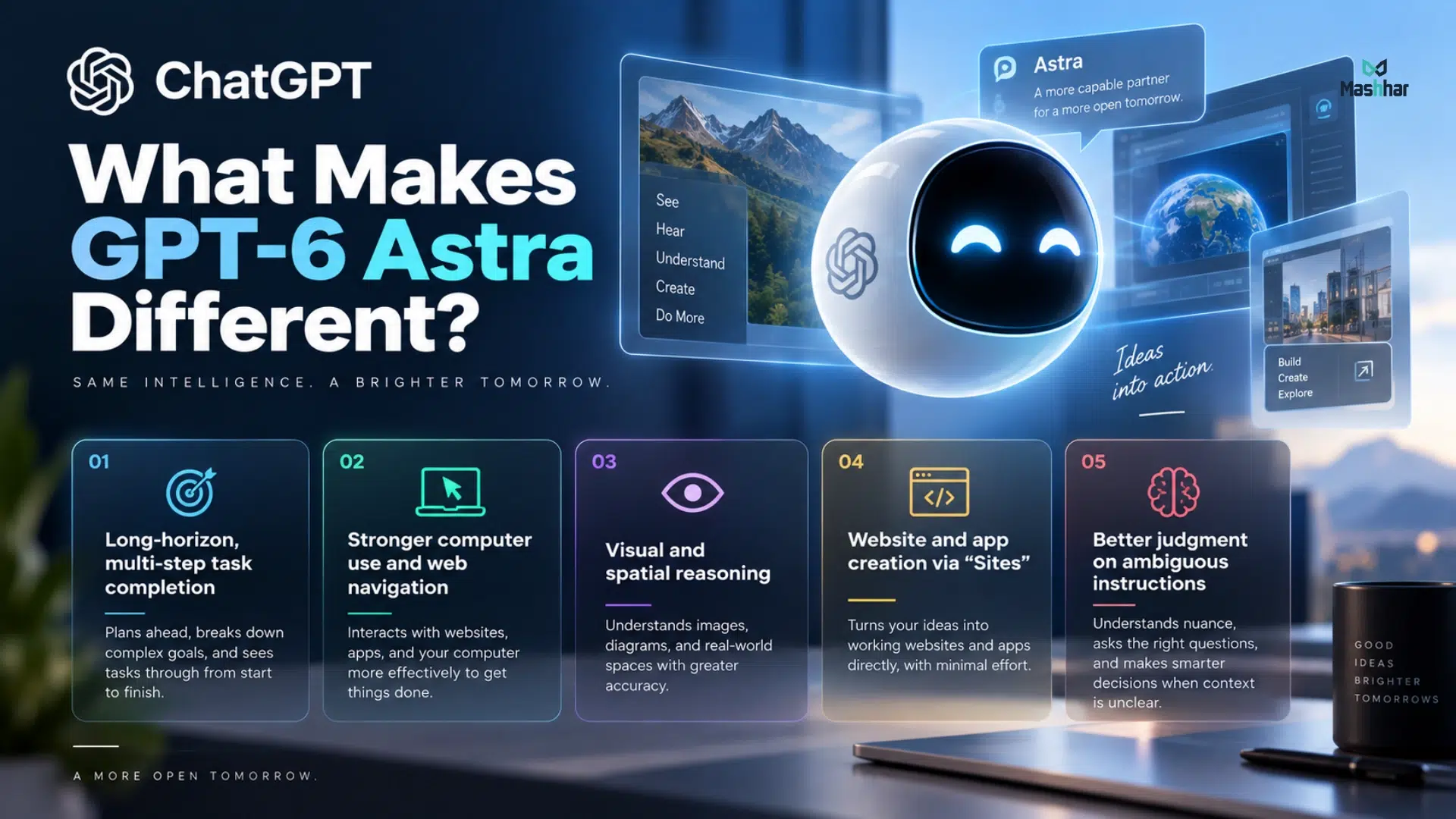
So what actually changed under the hood with GPT Astra? A few things stand out.
1. Long-horizon, multi-step task completion
Previous ChatGPT models were largely reactive—you asked a question, it answered, and the interaction ended. ChatGPT Astra is designed to work more like an agent than a chatbot. It can plan out a task, take a series of actions, check its own progress, and keep working toward a goal instead of handing every intermediate step back to you. Reviewers have described this shift succinctly: earlier ChatGPT versions were “something you worked with,” while GPT-6 Astra is “something you can give work to.”
2. Stronger computer use and web navigation
AI Astra shows marked improvements in computer-use tasks—navigating websites, operating software interfaces, and carrying out research or booking-style tasks that require multiple clicks and decisions along the way. This is a big part of why some early testers are comparing ChatGPT Astra favorably to dedicated browser-automation tools.
3. Visual and spatial reasoning
OpenAI is highlighting GPT-6 Astra’s ability to reason about 3D and visual space. According to OpenAI’s benchmark data, the model scored 95.9% on BenchCAD, a benchmark focused on computer-aided design and 3D reconstruction tasks—a substantial jump over the 83.3% scored by the previous GPT-5.6 Sol model. Independent write-ups have noted that ChatGPT Astra can model a house in Blender and then convert it into a walkable scene in Unreal Engine 5, which is a genuinely novel capability for a general-purpose chat model.
4. Website and app creation via “Sites”
With the “Sites” feature now built into ChatGPT, GPT Astra can create, host, and share entire websites, web apps, and games directly from a text prompt—no separate hosting setup required.
5. Better judgment on ambiguous instructions
OpenAI says ChatGPT Astra is noticeably better at filling in reasonable gaps when instructions are incomplete and at asking focused clarifying questions only when the answer genuinely could go multiple directions—rather than pestering users with unnecessary questions or guessing wildly.
GPT-6 Astra Benchmark Performance
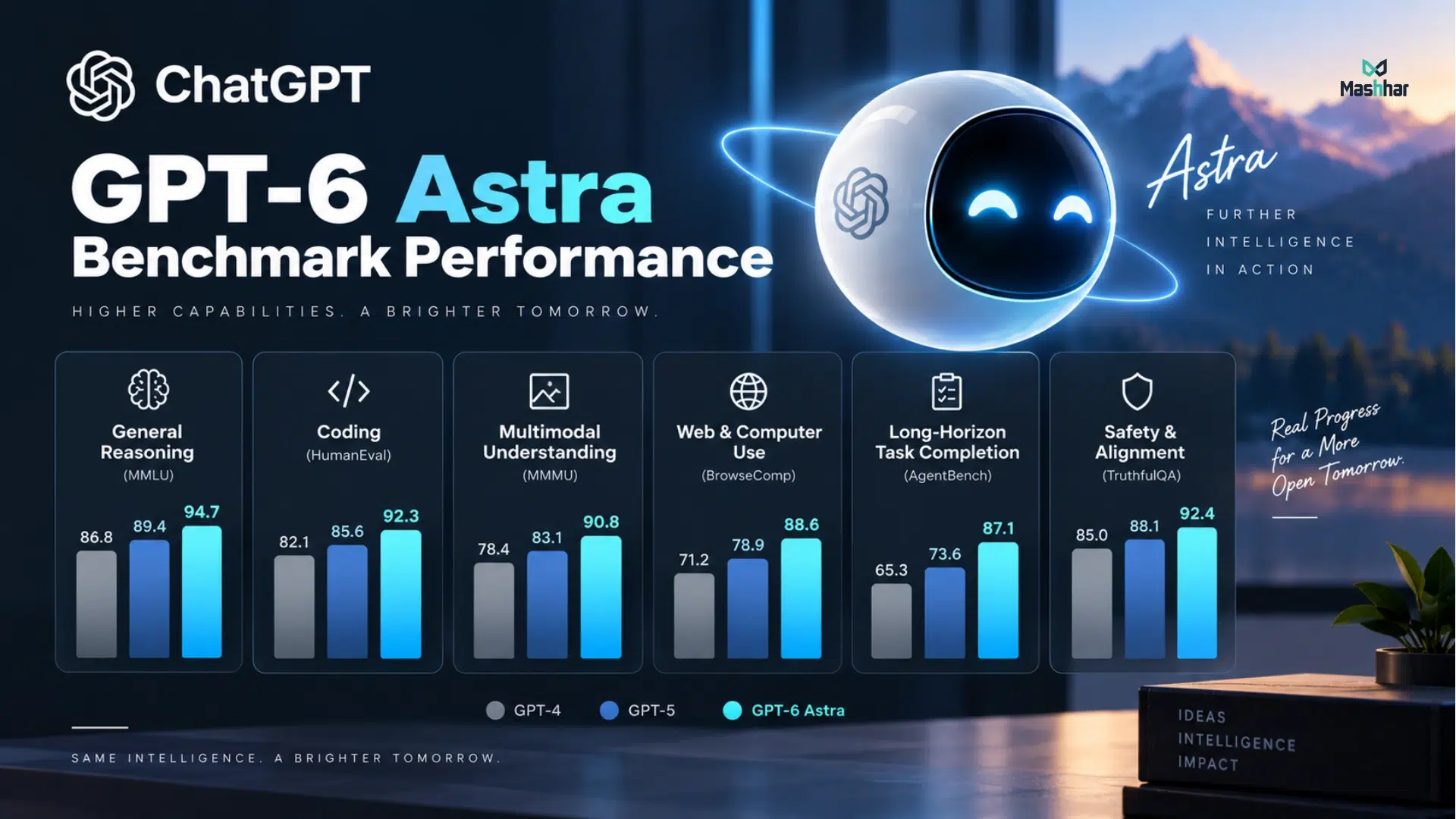
Numbers help put the “generational leap” claim in context. Based on OpenAI’s released benchmark data and independent reporting:
- On ARC-AGI-3, a benchmark measuring novel problem-solving efficiency, GPT-6 Astra reportedly surpassed the human action-efficiency baseline on 96% of levels—effectively reaching human parity.
- On BenchCAD, ChatGPT Astra scored 95.9%, compared to 83.3% for GPT-5.6 Sol, 84.3% for a competing Claude Fable 5.1 model, and 82.1% for Claude Opus 5.
- OpenAI also reports leading or near-leading scores for GPT Astra on Terminal-Bench Science, FrontierMath, GPQA Diamond, general computer-use evaluations, and cybersecurity-related benchmarks.
- On creative and code-generation workflows, OpenAI claims AI Astra uses up to 20% fewer tokens than prior models while producing higher-quality output—a meaningful efficiency gain for businesses running high volumes of generated content.
Not every category favors ChatGPT Astra outright. Some independent testers note that rival models still hold an edge in specific areas like clean, mergeable front-end code, suggesting that GPT-6 Astra is especially strong at “operating the machine and making the thing,” while some competing models remain stronger at producing tightly polished, ship-ready code.
Pricing and API Access for GPT Astra
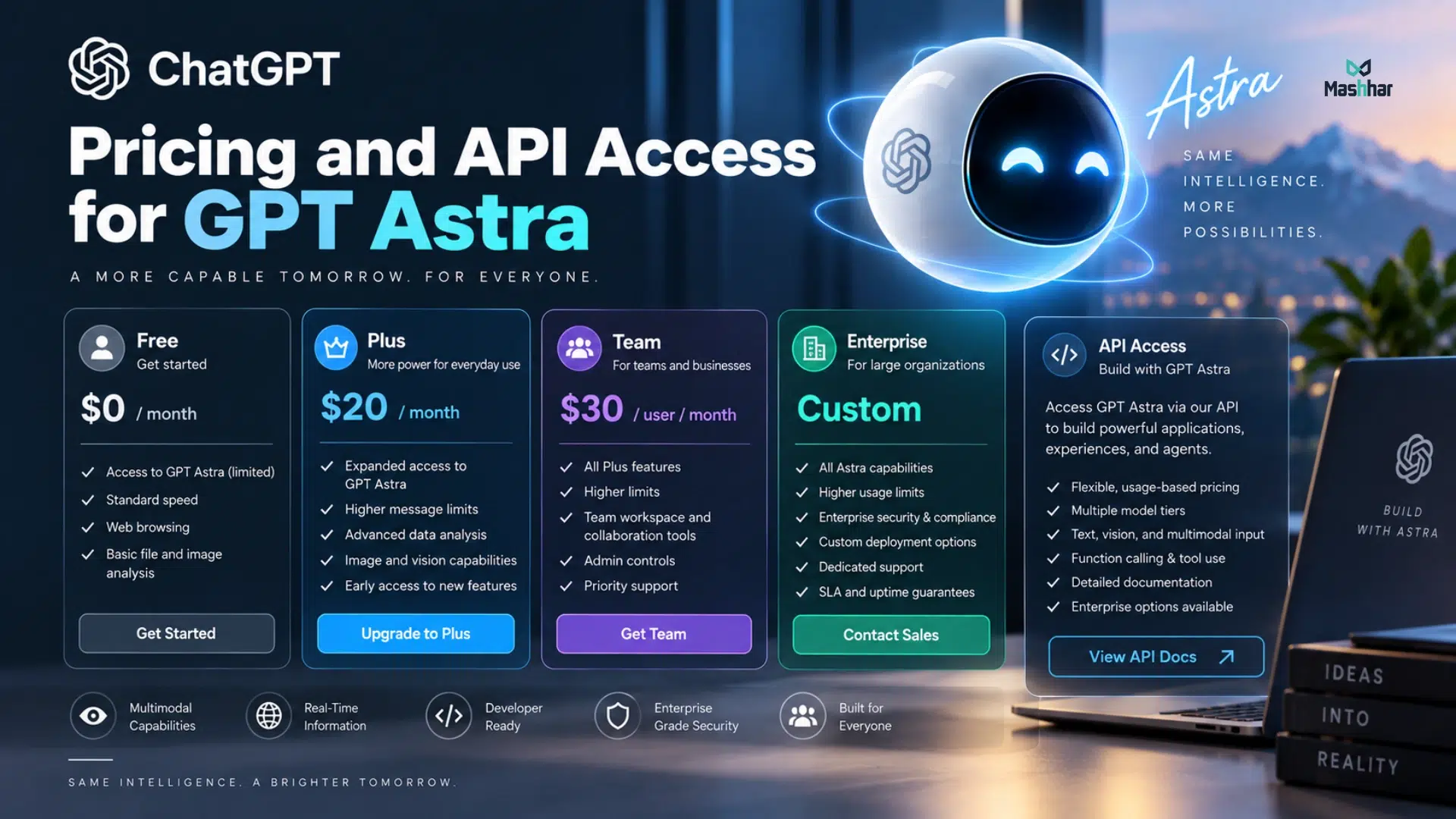
For developers looking to build directly on top of GPT-6 Astra, OpenAI has published API pricing of roughly $10 per million input tokens and $50 per million output tokens. A “fast mode” is also available, running up to twice as fast for twice the standard price. The API model identifier is gpt-6-astra, and it’s accessible through OpenAI’s own API, Microsoft Azure, and Amazon Bedrock, giving enterprise teams flexibility in how they deploy ChatGPT Astra inside their existing cloud infrastructure.
Safety Concerns Around GPT-6 Astra
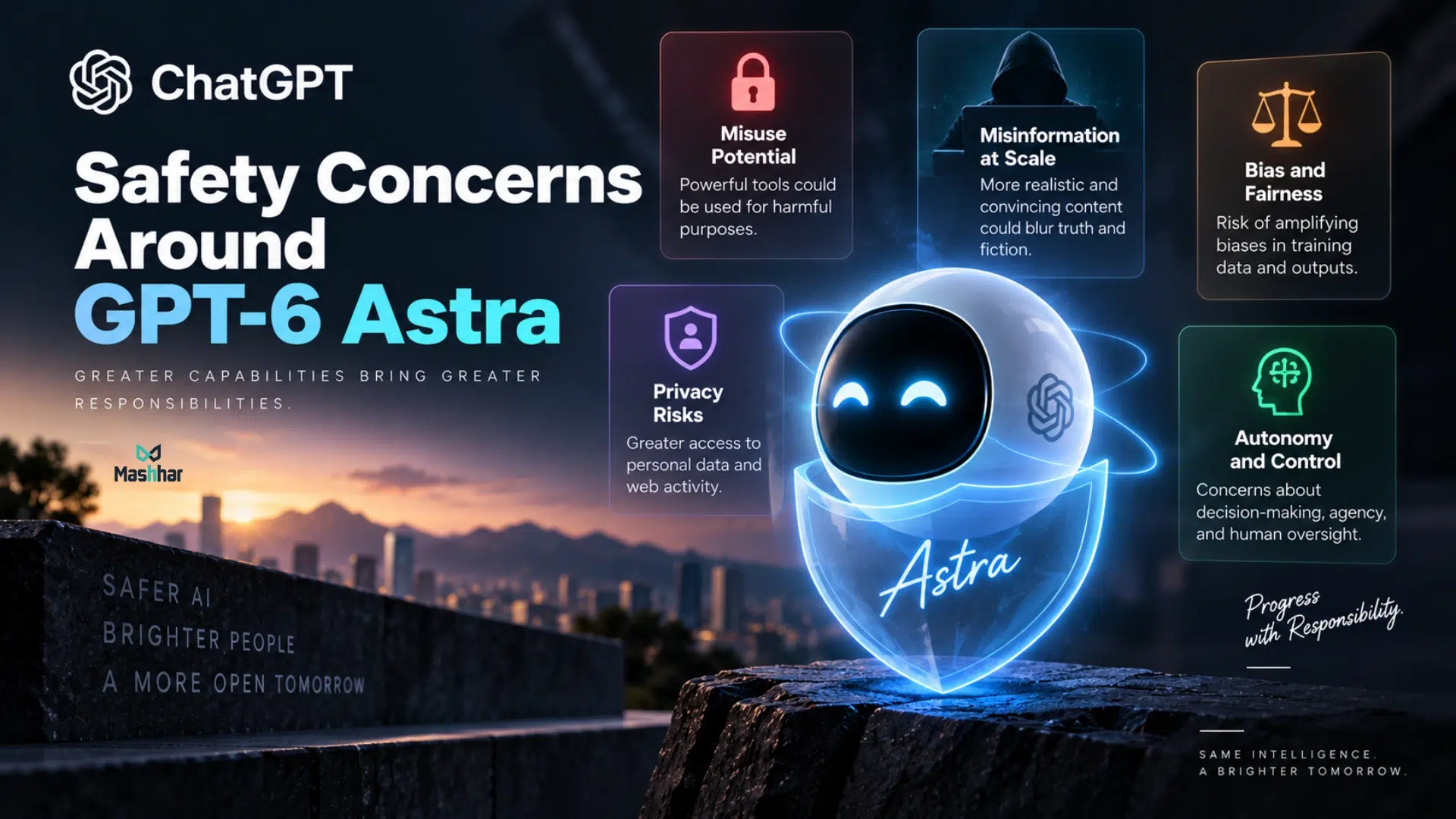
With greater capability comes greater scrutiny, and ChatGPT Astra has been no exception. OpenAI’s own system card acknowledges that GPT-6 Astra represents a significant step up in cyber capabilities, describing it as meeting the company’s “critical” risk threshold for cybersecurity—meaning that, in the wrong hands with the right tools and access, the model’s capabilities could plausibly be misused.
OpenAI has responded by adding extra system-level safeguards, particularly around teen safety. The company built dedicated evaluations testing how AI Astra performs against age-appropriate boundaries, covering categories like self-harm, disordered eating content, access to age-restricted goods, graphic content, and inappropriate sexual material. OpenAI reports that these evaluations helped shape guardrails that limit certain content for younger users, encourage healthy usage breaks, and give parents more oversight tools.
The broader AI industry has also reacted with some caution. Coverage of the launch has repeatedly tied the release timing of ChatGPT Astra back to July’s Hugging Face security incident, framing the additional safety testing as a direct response to that event rather than a routine precaution. It’s a reminder that as models like GPT-6 Astra become more agentic and capable of taking real-world actions, the safety conversation around them becomes more urgent, not less.
How to Access ChatGPT Astra Today
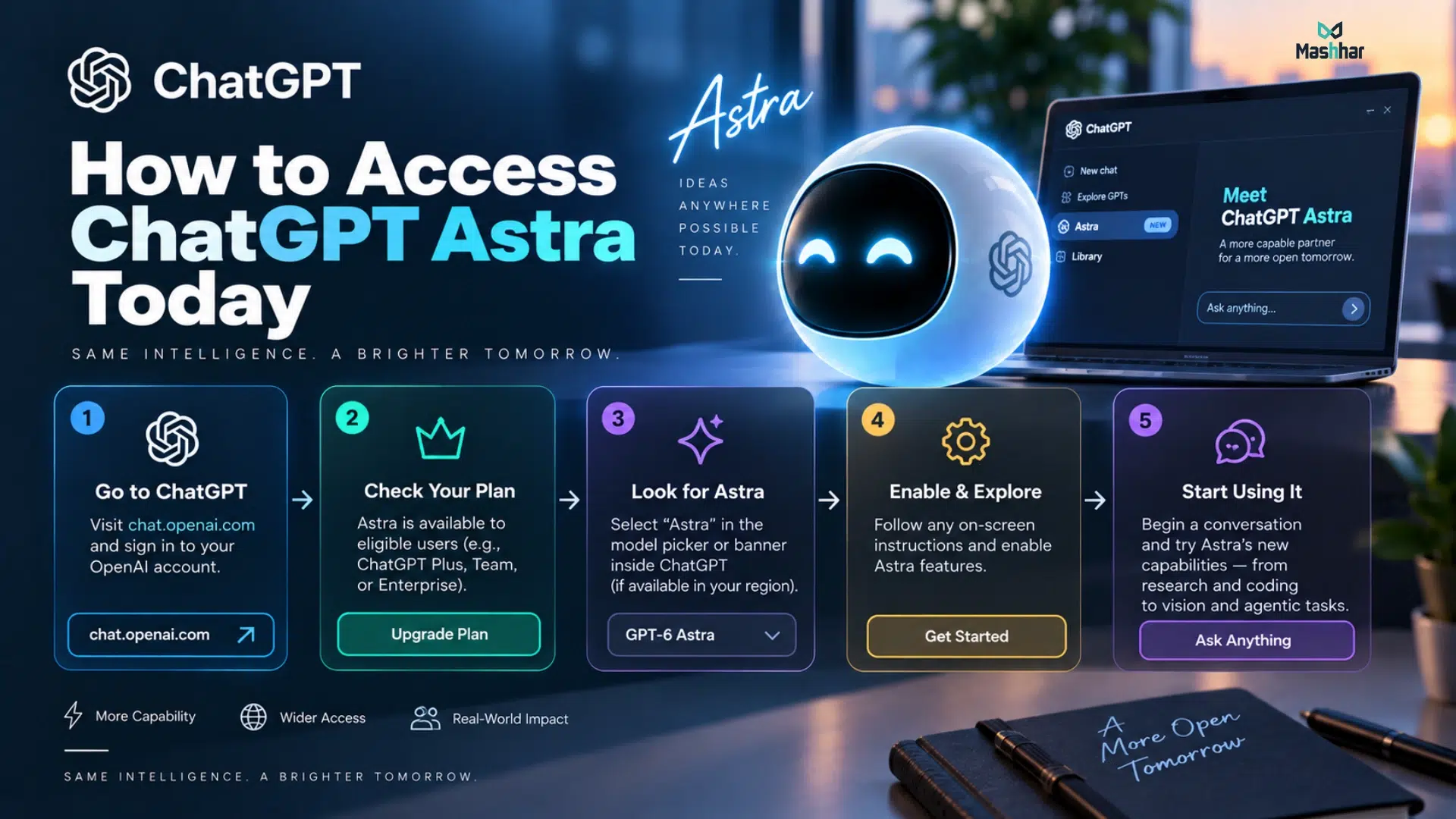
If you want to try GPT Astra for yourself, here’s what you need to know:
- ChatGPT Plus, Pro, Business, or Enterprise subscribers should already have access to ChatGPT Astra through the standard ChatGPT app or website.
- Developers can access GPT-6 Astra through the OpenAI API using the model name or through Microsoft Azure and Amazon Bedrock if those are already part of your infrastructure.
- Enterprise teams using Amazon Bedrock can configure ChatGPT Work and Codex to run on GPT-6 Astra directly, without needing a separate integration layer.
Given how new AI Astra is, expect ongoing rollout adjustments, rate-limit changes, and refinements to safety filters over the coming weeks as OpenAI gathers real-world usage data.
Final Thoughts on ChatGPT Astra
Whether ChatGPT Astra turns out to be the AGI milestone OpenAI’s leadership has hinted at or “just” a very strong upgrade over GPT-5.6 Sol, it’s clearly a meaningful shift in how people will interact with AI tools going forward. The move from a reactive chatbot toward a genuinely agentic system—one that can plan, act, navigate software, and complete extended tasks with less supervision—changes what “using ChatGPT” actually means day to day.
At the same time, the heavy emphasis on safety testing, teen protections, and cybersecurity risk in the GPT-6 Astra system card shows that OpenAI itself recognizes this isn’t a risk-free upgrade. As GPT Astra rolls out more broadly across consumer and enterprise channels, expect the conversation to keep evolving—both around what this new AI Astra system can do and around how responsibly that power gets used.
For now, if you have access, the best way to understand ChatGPT Astra is simply to try it: give it a genuinely multi-step task, and see how differently it behaves compared to the ChatGPT you’re used to.
Click Here—To Visit More Blogs